
Arrest History in Hamden
Hamden Police creates the local record when its officers make an arrest. Other agencies may be responsible for an event on a state highway, university property, or another special jurisdiction. The agency named on the arrest paperwork is the key routing clue. Hamden Police holds its own incident, arrest, detention, dispatch, and related records, but it is not a statewide repository and cannot certify that someone has no record elsewhere.
An arrest produces several documents, not one permanent profile. Officers prepare the arrest report and probable-cause account. Detention staff create intake data, inventory property, complete identity work, and record bond or release instructions. Prosecutors may later change the allegations when filing a court case. That is why a Hamden police record, Connecticut DOC result, court docket, and SPBI history can differ while each accurately reflects its own stage.
Start With Hamden Police
Hamden has a municipal lockup, not a county jail. There is no Hamden county sheriff, county jail roster, or town-hosted arrest-name database. For a very recent event, call Hamden Police at 203-230-4000 and ask whether the person remains in local detention or has been released or transferred. The official Hamden Police directory is the source for the department contact shown here.
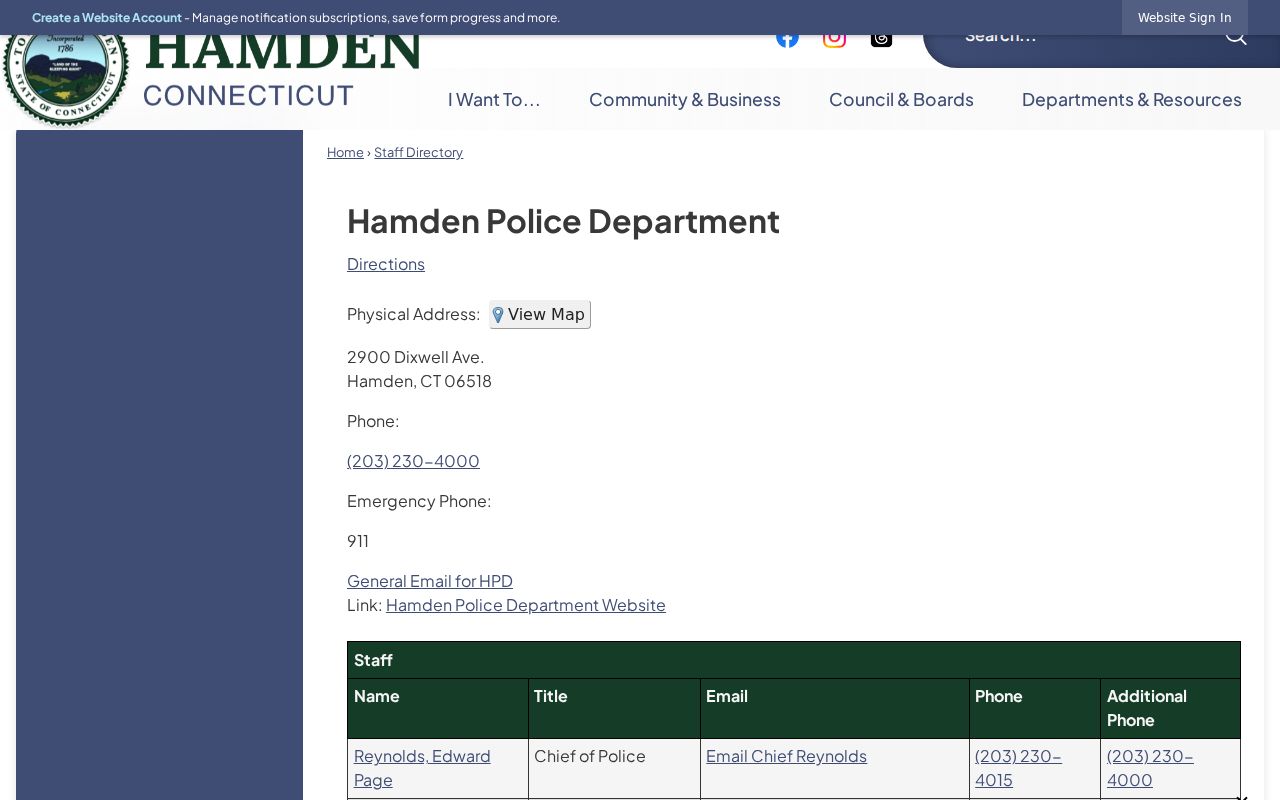
The directory points a searcher to the actual local custodian instead of a commercial lookup service. A phone status check is still different from obtaining the arrest report. Ask Records for the case-numbered material when the details, narrative, or release terms matter.
How to Look Up Hamden Arrests
No single public screen gives a complete Hamden arrest history. Use the channel that matches the question, then compare dates, agencies, and docket numbers. Exact identifiers reduce same-name errors and help Records locate the right event.
- Call Hamden Police. Use 203-230-4000 for immediate local custody status and to confirm the current Records request channel.
- Send a focused records request. Give the incident or case number when known, date and approximate time, location, involved party, exact record type, and preferred format. Ask for reasonably segregable portions if some content is exempt.
- Search Connecticut DOC. Use the CT DOC Offender Information Search by DOC number or name and date of birth after a transfer. “Accused” status is not a conviction.
- Check the court trail. Search the Connecticut Judicial Branch Criminal/Motor Vehicle Case Look-up, including Pending Case and Daily Docket. The docket reveals whether prosecutors filed a case and where it is heard.
- Use SPBI for official state history. The Connecticut Criminal History Request System serves name-based or fingerprint-supported state history requests. It is not a live Hamden booking log.
For older court material not shown online, submit a written search request first to the Geographical Area courthouse where the arrest occurred. Hamden normally routes to G.A. 7 at Meriden, though a serious case can move to the New Haven Judicial District. Always let the docket, not county geography, identify the clerk.
Inside the Hamden Lockup
Hamden’s official holding policy shows what happens before release or transfer. The sequence can include transport, weapon and contraband security, a detainee search, property inventory, health and suicide-risk intake, identification, fingerprints, a booking photograph, charge processing, and creation of a case-numbered arrest packet. Staff then arrange bond, release, court presentation, or transfer to state custody.
Some intake fields exist to protect health and safety. They are not automatically public profile fields. Medical conditions, medications, injury, disability, and mental or physical condition may appear on the intake form but can remain protected. Booking and incidental recordings also exist as distinct records. A requester who needs one should name it instead of assuming a general request for “the report” includes every file.
What a Hamden Arrest Record Shows
A useful arrest record ties the event to an agency and case number. The public portion and the full internal packet are not identical. Connecticut law defines a core public arrest record, while other investigative and intake material may require redaction or may not be disclosed.
| Case identifier | Hamden incident or arrest number used to locate the packet and related reports. |
|---|---|
| Arrest event | Date, time, place, arresting agency, and officer identifier. |
| Legal basis | Warrant or warrantless basis, alleged offense, and statute listed at arrest. |
| Narrative | Probable-cause account or a reference to the associated incident or arrest report. |
| Booking data | Intake time, identity work, fingerprint transaction, and photograph where created. |
| Custody outcome | Bond or release terms, court date, and transfer or release information. |
| Protected fields | Medical screening, victim and witness details, juvenile identifiers, and sensitive investigative content may be withheld or redacted. |
A police charge records the allegation at arrest. It may not match the prosecuted charge or final disposition. The linked Hamden criminal court case record is the better source for later pleas, rulings, dismissal, conviction, and sentence.
Hamden FOIA Arrest Boundaries
Connecticut’s public arrest-record rule defines the core record under CGS §1-215. It includes the arrested person’s name, race, address, arrest date, time and place, and offense. For a warrant arrest, it also reaches the warrant application and affidavit. For a warrantless arrest, it reaches the official arrest, incident, or similar report, subject to lawful limits.
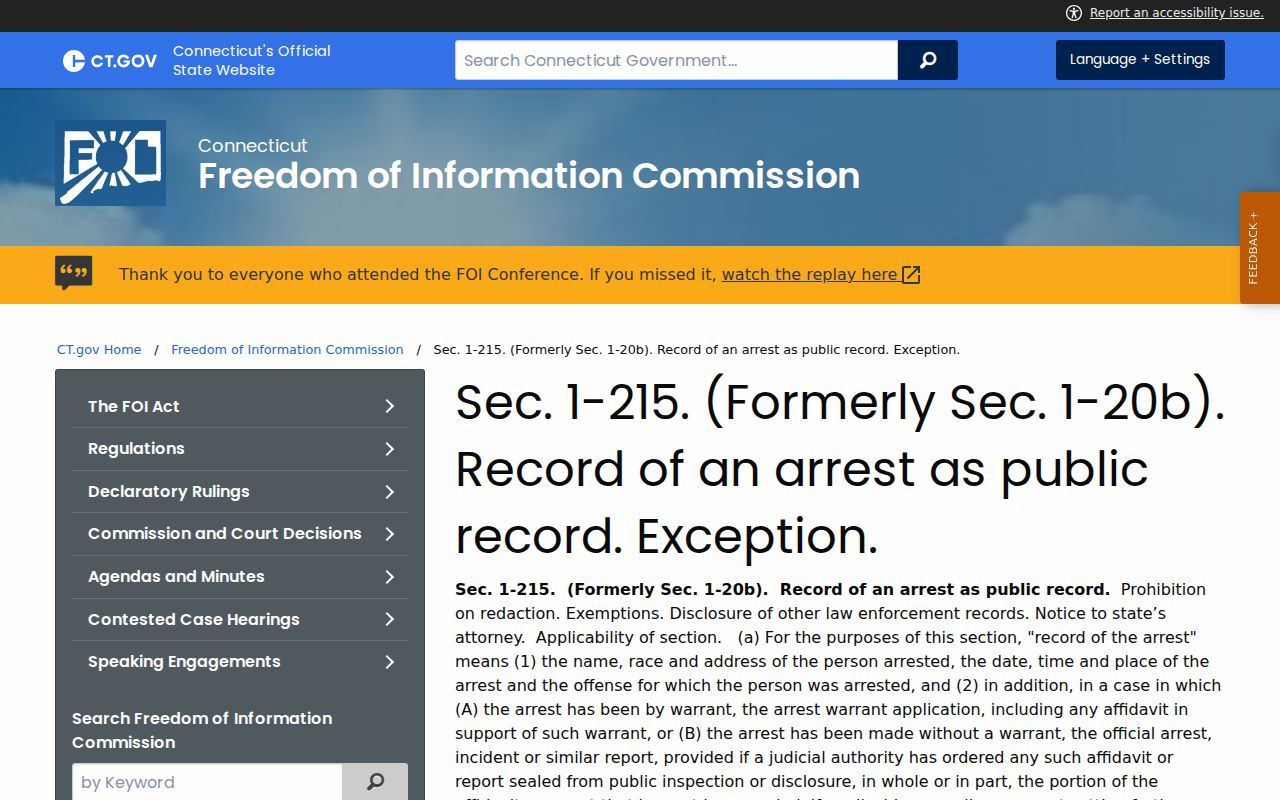
The rule does not open the whole investigative file. Juvenile and erased records fall outside the public arrest provision. Hamden may redact protected victim or witness identity, material that could harm a pending enforcement action, personal identifiers, and sealed content. Requesters can ask for all reasonably segregable material and the legal basis for any denial. Connecticut FOIA calls for prompt access, but the research found no fixed Hamden police fee, web form, or promised turnaround.
Recent Arrests and Booking Logs
Hamden does not publish a complete official arrest blotter, online inmate roster, police app, or report-copy portal. Town News Flash can carry selected police releases, but it is not a full booking log. An absent news post therefore says nothing about whether an arrest occurred. Start with the Police main line and Records request process instead.
After a transfer, the state DOC search may show current custody and whether the person is listed as accused or sentenced. It updates daily, yet status can change faster than the display. It excludes youthful offenders and people held solely for ICE. New Haven Correctional Center is a state accused-status facility, not a county jail. DOC’s Public Information Office can assist at 860-692-7780 on weekdays from 8:00 a.m. to 4:30 p.m.
The court’s Pending Case and Daily Docket views provide another recent trail. They show a prosecution and scheduled court activity, not all police intake details. A release before DOC transfer may leave no DOC result, while a delay in court filing can leave no immediate docket. Those gaps make the police contact step essential.
Hamden Arrests Reach State Systems
Identity, fingerprint, and charge data from a Hamden booking can feed the State Police Bureau of Identification. The prosecutor then decides what allegations to pursue in Superior Court. A disposition such as conviction, dismissal, nolle, acquittal, or diversionary outcome later returns to the state history system. Timing explains why systems can disagree for a while.
CCHRS offers the official Connecticut history path. A name and date-of-birth search can return Connecticut conviction-history information, while pre-enrollment and fingerprints support an identity-linked review. Neither product acts as a minute-by-minute arrest feed. A name match also needs care because two people can share similar identifiers. For self-review, fingerprints provide the stronger identity link.
When Hamden Arrest Records Erase
Connecticut erasure rules can lawfully remove a case from public view. Judicial guidance says a nolle, meaning the prosecutor declines to pursue the charge at that time, is generally available for thirteen months before erasure. A not-guilty record remains available for a short statutory period after disposition, longer during an appeal. Eligible dismissed counts can also erase. Juvenile and youthful-offender matters are restricted.
Erasure changes what a clerk or agency may disclose or even acknowledge. It is not evidence that a search tool failed. A saved intake page can also become stale after dismissal, acquittal, pardon, or erasure. When the outcome matters, return to the official court and SPBI channels instead of relying on an old booking capture.
Arrests vs Convictions
Hamden Police documents custody based on probable cause. Connecticut Superior Court determines what charge proceeds and whether guilt is established. SPBI then compiles eligible state criminal-history information. These records answer different questions and should never be merged into one claim.
| Arrest Record | Conviction Record |
|---|---|
| Created first by Hamden Police or another arresting agency. | Follows a court finding or plea and is reflected by the court and SPBI. |
| Shows that custody occurred on an allegation. | Shows that the court entered a finding of guilt on a prosecuted charge. |
| Lives with the arresting agency, with later custody data at DOC. | Lives in the court file and eligible state conviction history. |
| Can lead to release, no filing, dismissal, nolle, acquittal, or conviction. | Can be affected by appeal, correction, pardon, Clean Slate, or statutory erasure. |
Note: A Hamden arrest is not proof of guilt, and the filed charge or final result may differ from the booking allegation.