
Criminal Cases in Hamden Courts
Hamden has no municipal criminal court, county court, or county clerk. Every local prosecution is a Connecticut Superior Court matter. The Judicial Branch town routing directory assigns ordinary Hamden criminal and motor-vehicle cases to Geographical Area 7, or G.A. 7, at 54 West Main Street in Meriden. More serious Part A felony work may proceed in the New Haven Judicial District at 235 Church Street. The docket's location controls, especially after a transfer.
The Superior Court clerk, rather than Hamden Police, holds pleadings, public motions, docket entries, judgments, and certified dispositions. Police retain the incident and arrest records that began the matter. That split explains why an arrest charge may not match the charge later filed by a prosecutor. The official courthouse directory is the best source for a current address and clerk number.
The Judicial Branch illustrates its courthouse directory on the official source below.
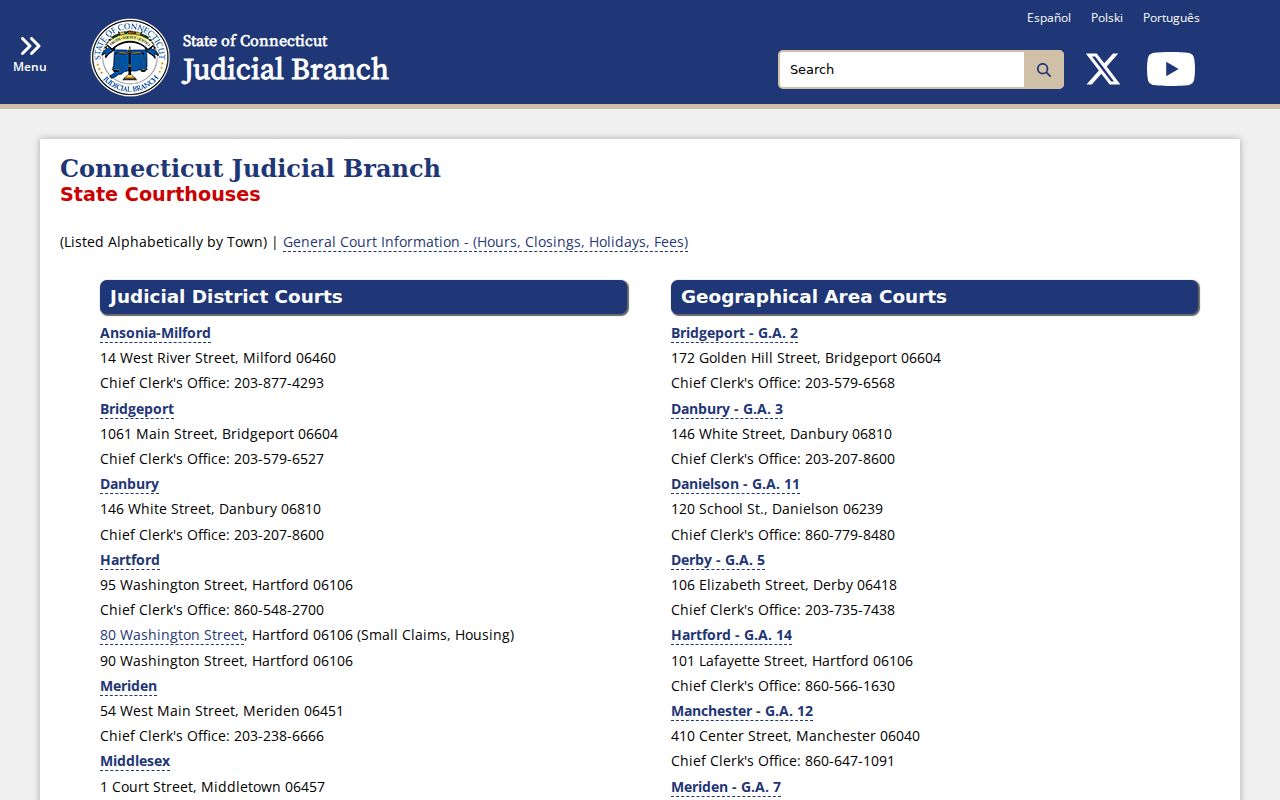
Use that directory after reading the case location, not as a substitute for the docket.
Which Court Has Hamden Cases?
Start with G.A. 7 for a routine Hamden arrest. Its chief clerk's main number is 203-238-6130, and its Court Service Center is 203-238-6499. The New Haven Judicial District chief clerk can be reached at 203-503-6800 for a case shown at that location. Do not default to G.A. 23 merely because Hamden is associated with New Haven County. G.A. 23 serves other towns.
Superior Court G.A. 7
54 West Main Street
Meriden, CT 06451
203-238-6130
New Haven Judicial District
235 Church Street
New Haven, CT 06510
203-503-6800
The town and court routing page shows how Hamden is assigned.
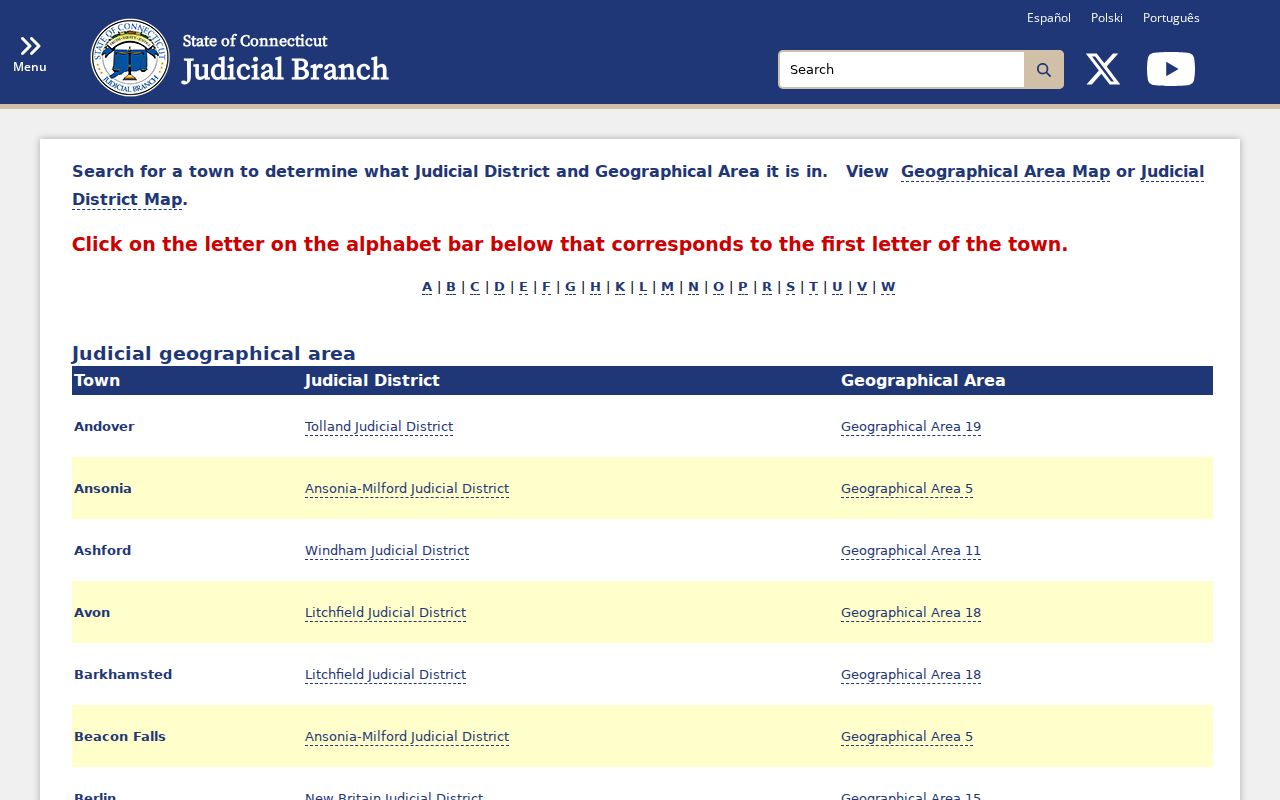
That routing is the starting point; a transferred case's current docket remains the final check.
How to Search Hamden Cases
The free Connecticut Criminal and Motor Vehicle Case Look-up offers separate paths for convictions, pending cases, daily dockets, docket numbers, defendant names, and attorney juris numbers. Search by docket number when it is known. A name result can refer to a different person, so compare every public identifier and the court location before relying on it.
- Open the Judicial Branch criminal lookup and choose the pending, conviction, daily docket, or docket-number path that fits the question.
- Enter the docket number when available. For a conviction name search, enter at least the defendant's last-name prefix.
- Narrow a broad result with first initial, birth year, year tolerance, court location, and Criminal category.
- Open the matching docket and compare charges, case status, dates, and location.
- Contact the clerk shown on the docket to inspect or order public documents and certified copies.
The exact conviction defendant form uses these fields:
| Field Label | Type | Required | Format or Options |
|---|---|---|---|
| Last Name (begins with) | Text, max 60 | Yes | Prefix search |
| First Initial | Text, max 1 | No | Single character |
| Birth Year | Text, max 4 | No | Four digits |
| Year Range + or - | Text, max 1 | No | Expands birth-year range |
| Court Location | Dropdown | No | Includes New Haven JD and GA entries |
| CategoryType | Dropdown | No | Blank, Criminal, Motor Vehicle |
The official conviction defendant search shows the live form.
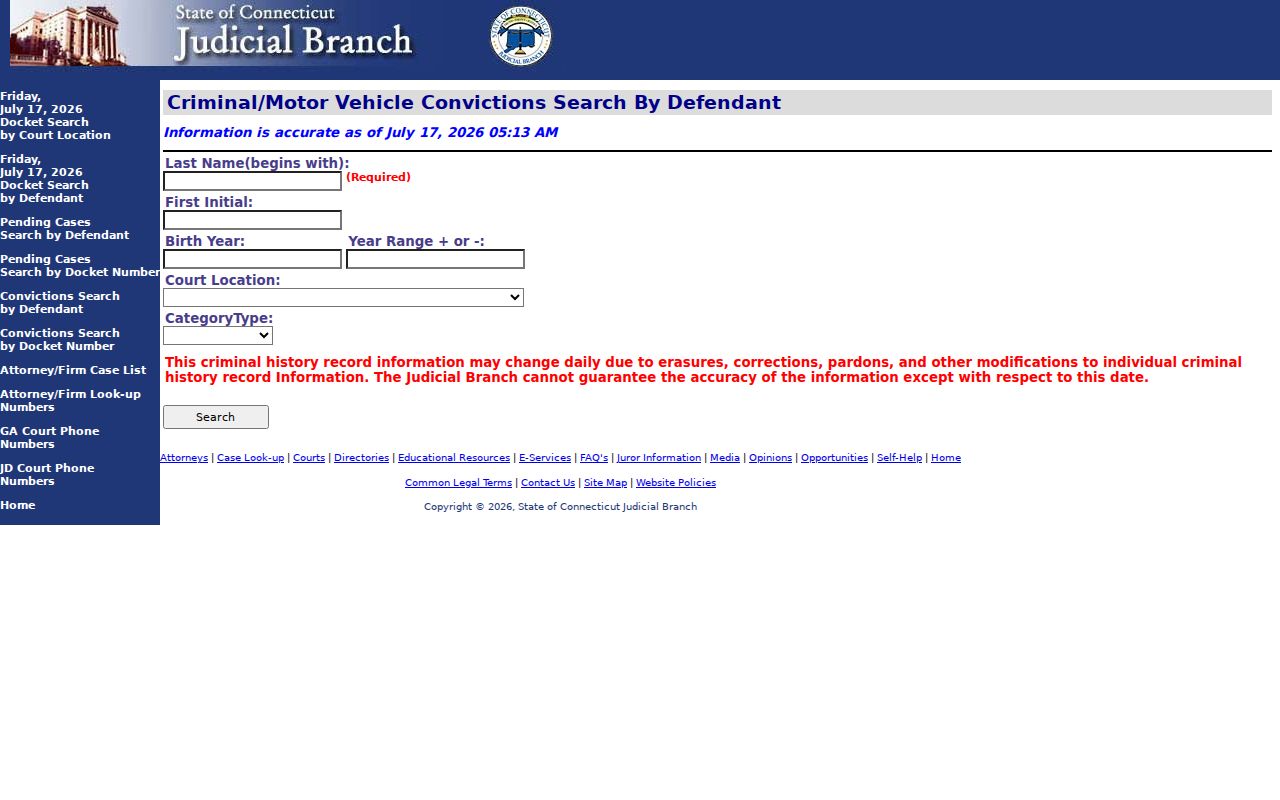
Its prefix and optional narrowing fields make careful identity checks essential.
Read Hamden Case Numbers
A Connecticut docket number carries useful routing clues. The prefix identifies the court location. A case-type segment may read CR for criminal or MV for motor vehicle. Two digits identify the year, followed by a seven-digit case number. An S suffix marks the original case. A T followed by a digit may mark a transfer, while A may identify a severed case. These codes help distinguish two matters with similar names and explain why a Hamden case no longer appears where it began.
- Pending
- The prosecution has not reached a final disposition.
- Disposition
- The court's outcome for a charge, such as conviction, dismissal, acquittal, or nolle.
- Nolle
- A prosecutor's decision not to pursue the charge at that time; Connecticut erasure timing may later apply.
- Certified disposition
- An official clerk-certified copy of the court's final resolution.
Note: A pending docket records an allegation, not proof of guilt.
What Hamden Case Files Show
A public Hamden court file can contain the executed warrant and probable-cause affidavit, a summons or complaint, Uniform Arrest Report, information or substitute information, written nolo plea, program papers, motions, and disposition documents. Sealed or confidential items remain unavailable. Screen data may sometimes be given by phone, but documents must be inspected or ordered through the clerk.
| Docket Number and Court | Identifies the case, year, type, location, and possible transfer. |
|---|---|
| Charges | Lists filed offenses, statutes, dates, and each charge's status. |
| Docket Entries | Records public hearings, filings, rulings, and case events. |
| Bond and Dates | May show public bond terms, next event, and scheduled appearance. |
| Disposition | Shows the plea, verdict, dismissal, nolle, or other result by count. |
| Sentence | May include incarceration, suspended time, probation, fine, and special parole. |
The Judicial Branch answers common inspection questions in its court records FAQ.
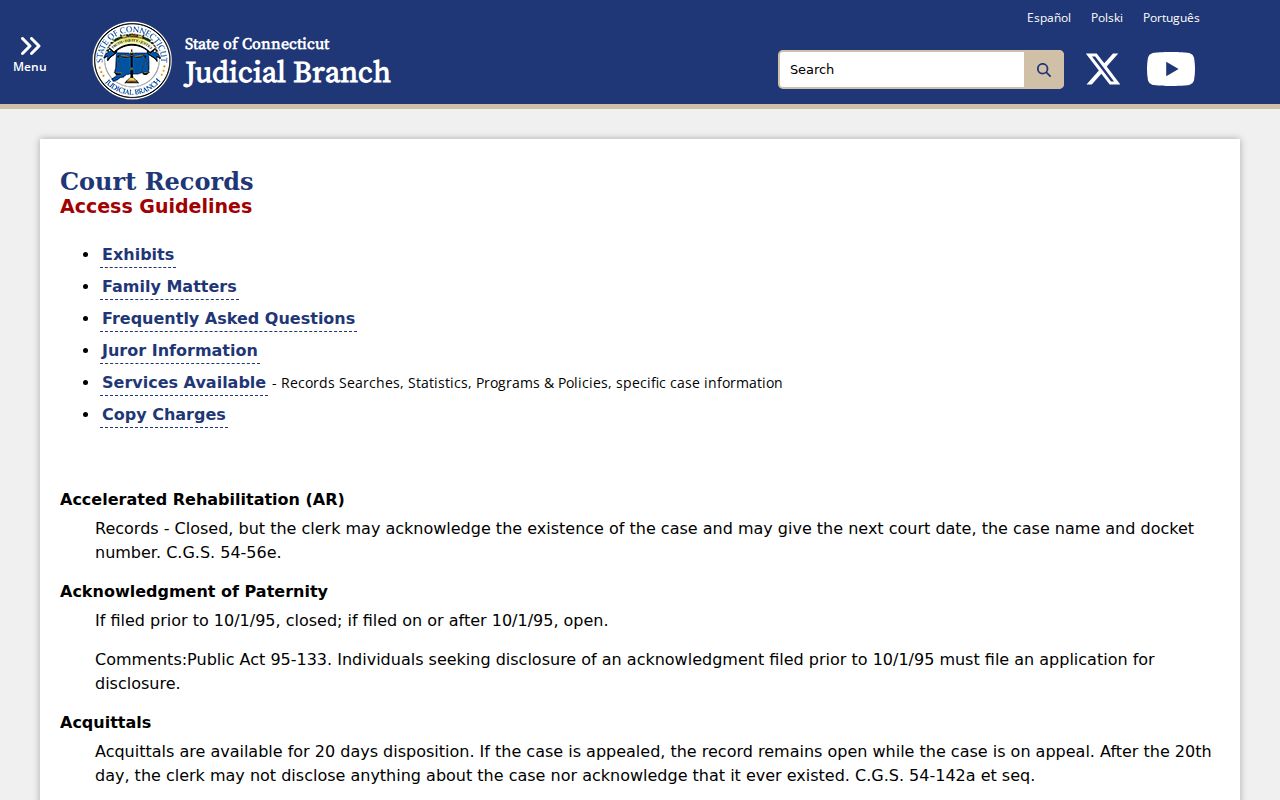
That guidance also explains why an online result may not equal the full public paper file.
Get a Certified Hamden Disposition
A screenshot is not a certified court record. For an official resolution, locate the case online, note its complete docket number and current courthouse, and ask that clerk for a certified disposition. The Judicial Branch criminal court help page identifies certified resolution copies as a clerk service. Ask the office about current copy and certification charges before ordering because the research does not establish a fixed Hamden-specific fee.
Older cases may require a written request to the Geographical Area court where the arrest occurred. Supply enough detail for an accurate search, including the defendant name, known date of birth, approximate arrest or disposition year, and docket number if available. The Public Information Desk can help visitors navigate courthouse services, but it does not replace the clerk as records custodian.
The official Public Information Desk source is shown below.
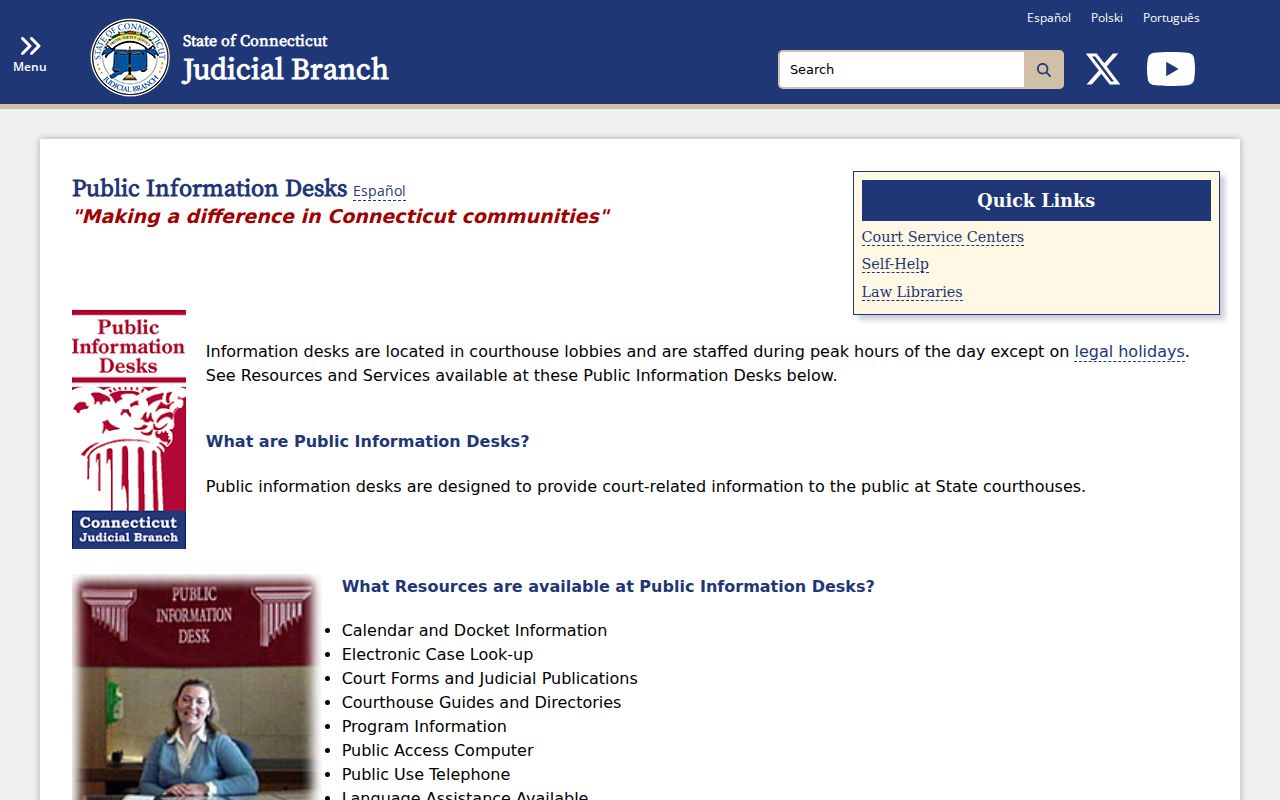
Use the desk for courthouse orientation, then direct the document request to the correct criminal clerk.
Stages of a Hamden Criminal Case
The police arrest charge starts the process, but the prosecutor decides what to file in Superior Court. The defendant is arraigned, meaning formally brought before the court to address charges and release conditions. Pretrial work can include motions, disclosure of evidence, negotiations, and program applications. A plea or trial may then produce a result for each count. Sentencing follows a conviction when it is not imposed at the same event.
Case flow: Charges Filed → Arraignment → Pretrial → Plea or Trial → Disposition → Sentencing
The official criminal court how-to source connects court dates, records, warrants, bonds, and certified outcomes.
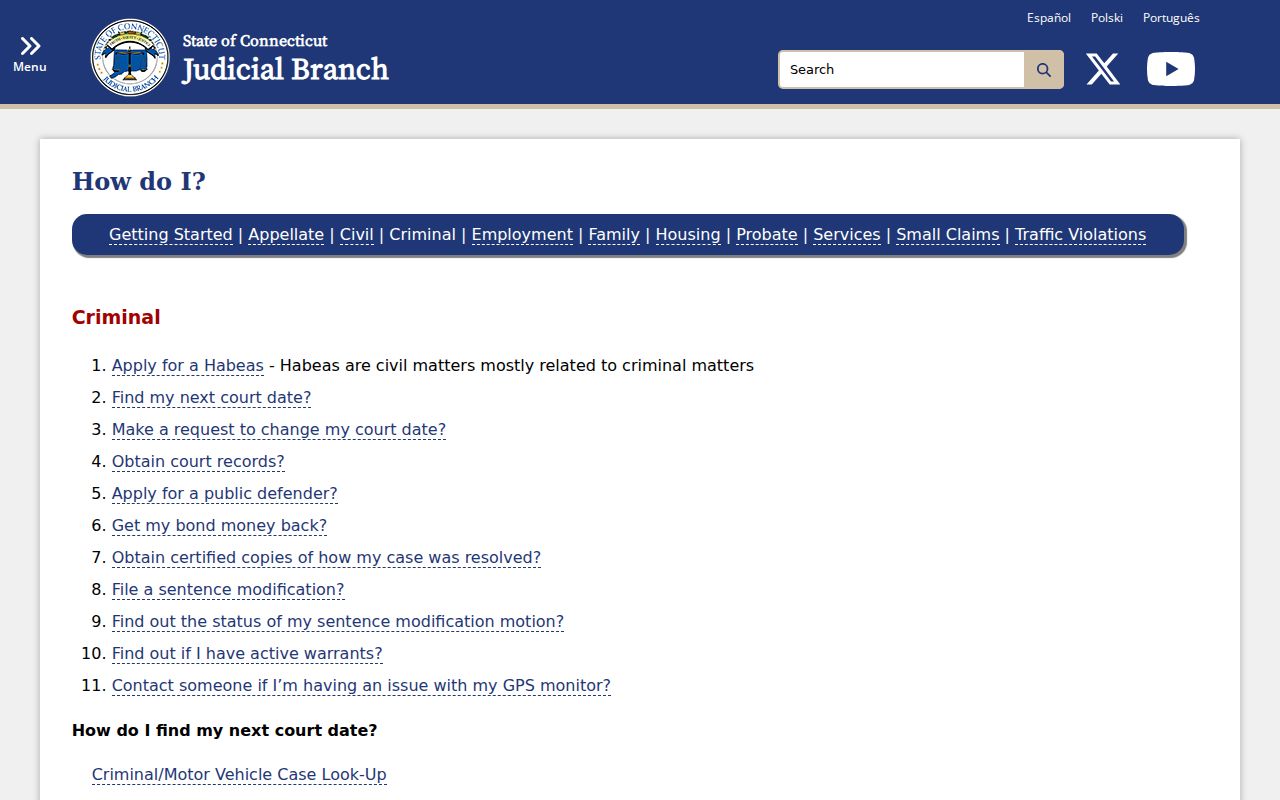
Each stage can create a new docket entry, while the final outcome may differ from the initial arrest charge.
Pending Hamden Cases and Dispositions
The daily docket is a schedule, not a criminal history. A pending-case hit confirms an unresolved prosecution but not guilt. A conviction result answers a narrower outcome question, and even that display can change through correction, appeal, erasure, or pardon. Most convictions remain on the Judicial Branch website for no more than ten years. That web window does not mean older public files never existed or that every older matter is legally erased.
Use the docket to track the prosecuted charge. Use Hamden Police records for the original incident and arrest allegations. Use the Connecticut State Police Bureau of Identification when the goal is an official Connecticut conviction-history product. These sources can differ without any one of them being wrong because each covers a different stage and legal purpose.
Hamden Case Access and Restrictions
Connecticut court records are public only to the extent allowed by law and court rules. Juvenile matters are closed. Youthful-offender, infraction, violation, and erased cases do not appear in the ordinary public criminal lookup. Sealed filings, protected identifiers, and some victim information are also withheld. A disposed file can remain open while at least one count is not yet erasable, but an erased case is different: the clerk may be legally unable to acknowledge that it exists.
An empty web search is therefore not proof that no case ever existed. Check spelling and identity fields, try the docket-number path, confirm whether the matter is still pending, and contact the appropriate clerk for public older material. The clerk cannot override a seal or erasure order.
Older Hamden Cases Offline
When a Hamden conviction falls outside the web display period, begin with the known G.A. or Judicial District clerk. A written search request should state the defendant's full name, useful birth information, the approximate year, and the town of arrest. Broad name-only requests can return false matches or take longer to resolve. If the case moved from G.A. 7 to Part A, the transfer code and current location help route the request.
The Judicial Branch may provide public screen data by phone in some situations, but inspection and copy orders remain clerk functions. If the office reports no record, do not assume a technical failure. Erasure law can require nonacknowledgment. A stale third-party result or saved screenshot does not override the official response.